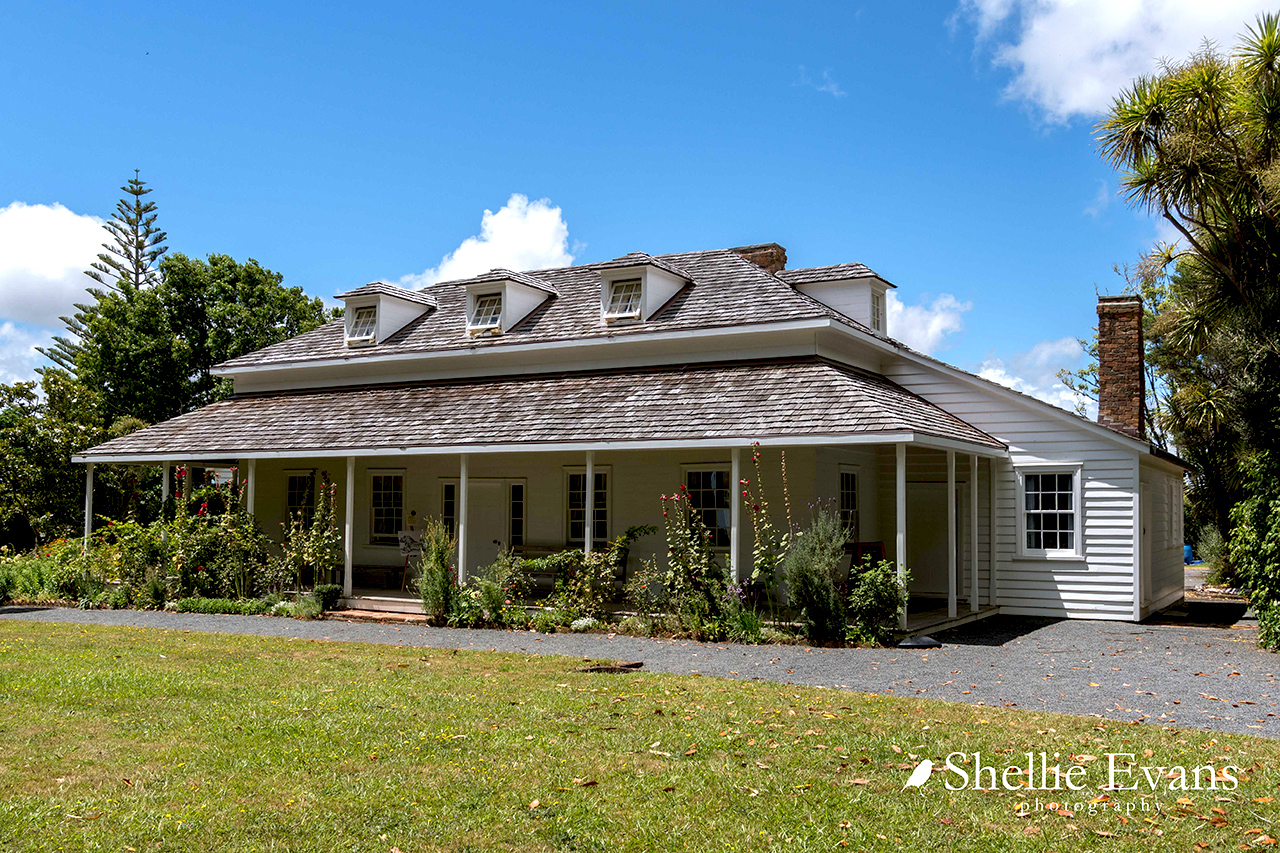
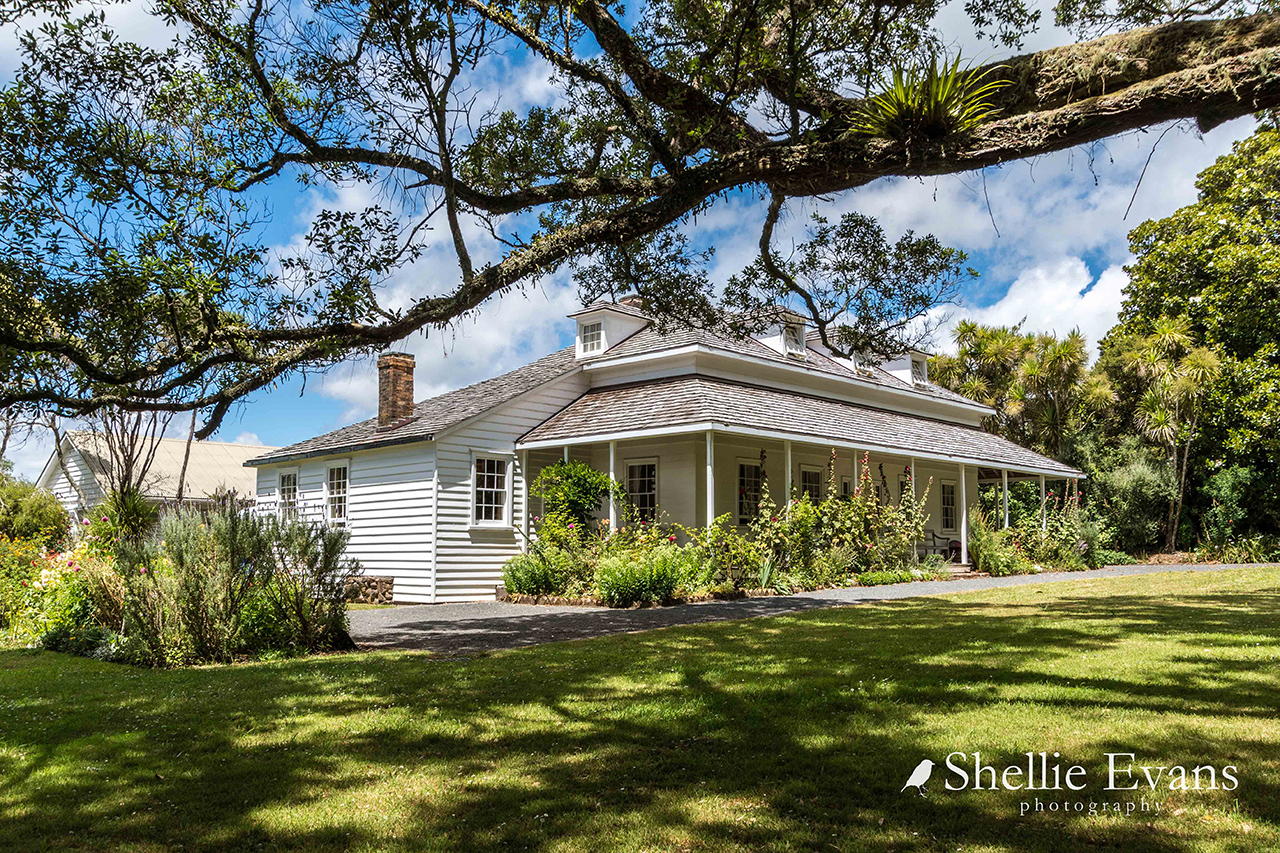
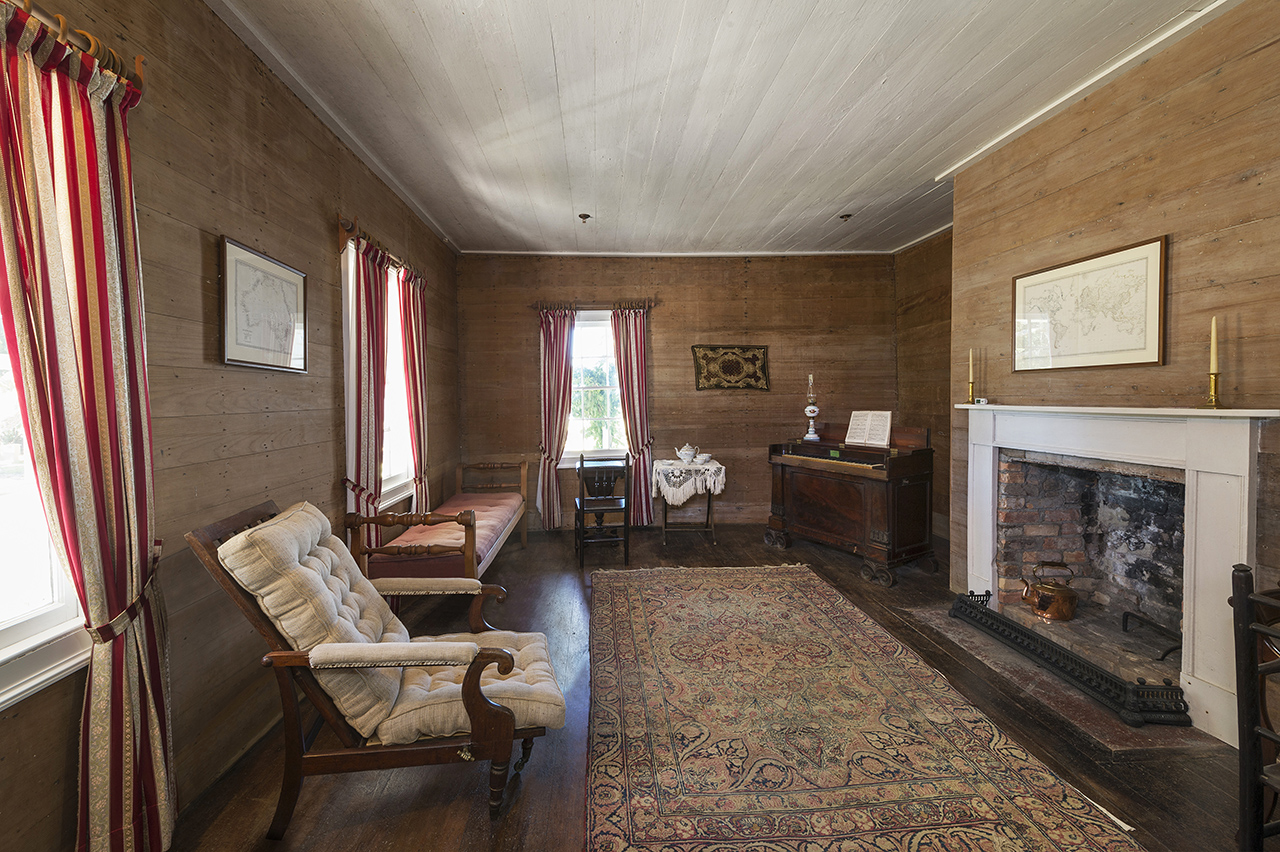
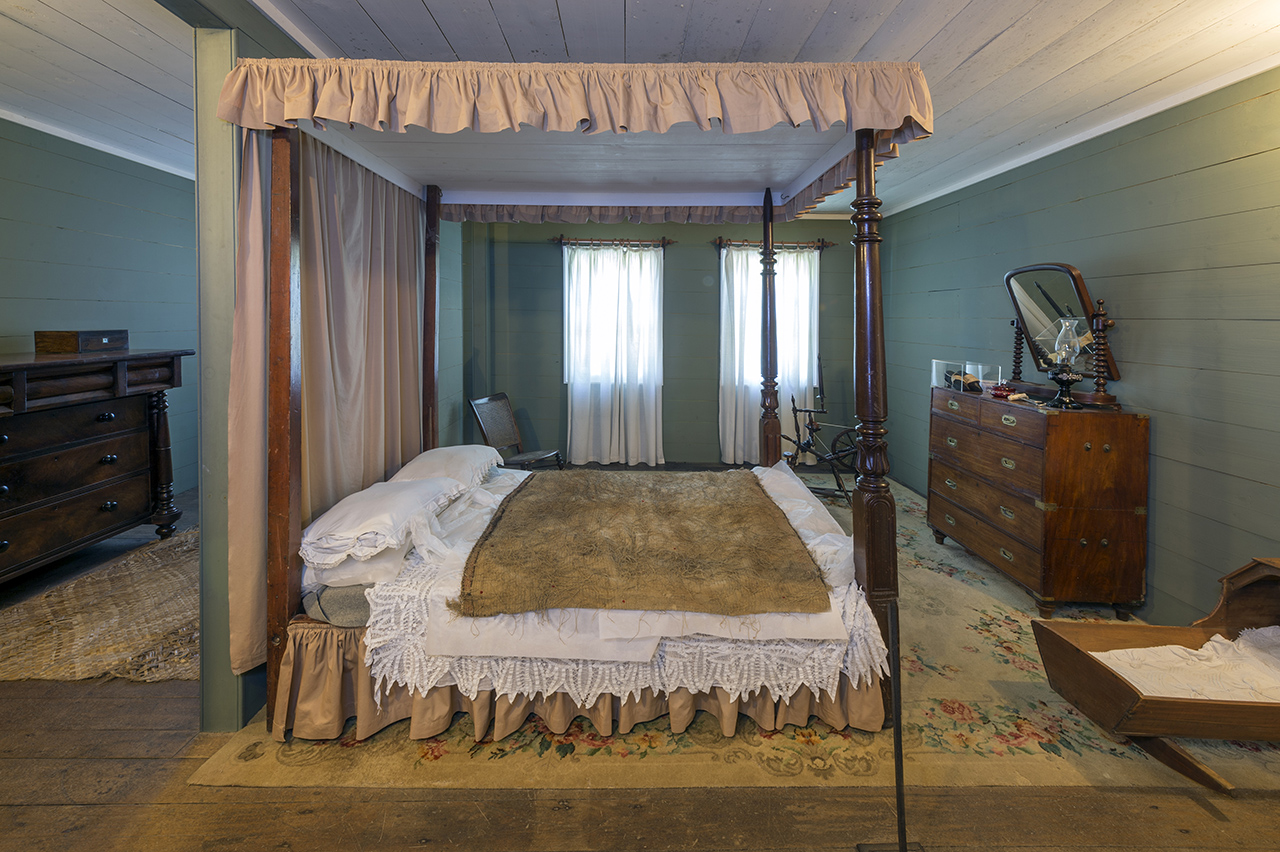
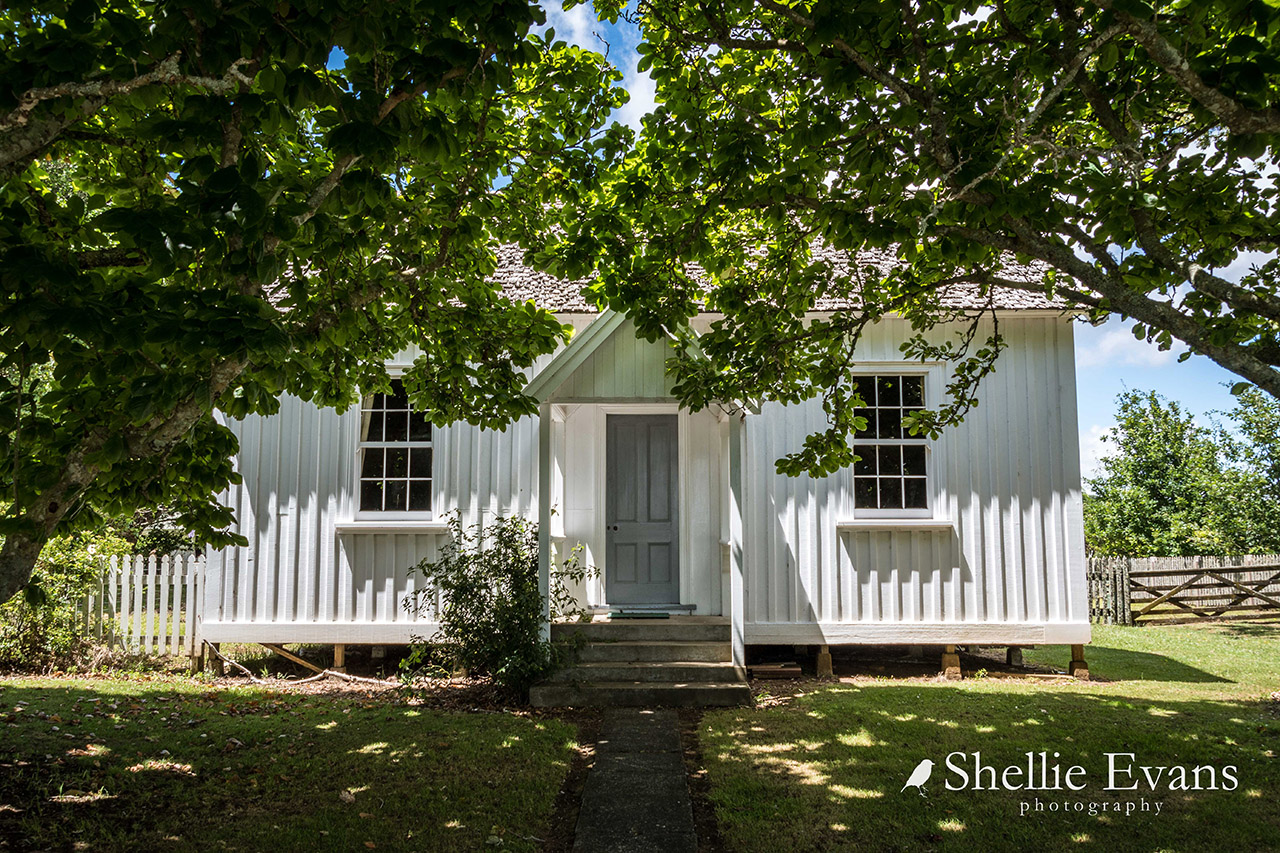
Te Waimate Mission House is the second oldest standing building in New Zealand, having been built in 1832. It was part of an extensive mission station, established by the London-based Church Missionary Society (CMS) two years before. It is the only survivor of a group of buildings, which included two similar dwellings, a chapel and a school, as well as several Maori houses. The station was also the earliest inland farm created by the CMS, set up to instruct local Maori in new farming techniques and to supply other missions with food. The house was built for the family of missionary George Clarke (1798-1875), with the help of a Maori workforce using local materials. It was erected as a single-storey dwelling of Georgian design, with an attic floor, verandah and prominent shingled roof. The building promoted the perceived benefits of Pakeha 'civilisation' through its quality and appearance, as well as in genteel aspects of its layout such as a dining room and parlour. Workaday activites were carried out in ancillary wings, while the building's role as a farmhouse can be seen in the inclusion of a cellar for stores. As an experimental farm, Te Waimate was visited by many prominent people of the time including Charles Darwin (1809-1882), who eulogised that he had come across 'an English farm house and its well dressed fields, placed there as if by an enchanter's wand'.
The success of the farm was shortlived, but the mission's role in fostering contact between Maori and Pakeha led to it being the scene of the second signing of the Treaty of Waitangi. This occurred on 10 February 1840, as the agreement was taken around the country for consideration by different Maori groups. From 1842-1844, Bishop George Selwyn (1809-1878) adopted the complex as St John's College, a collegiate institution and theological school for training Anglican clergy. Selwyn and his wife Sarah (?-1907) lived in the mission house, gentrifying its interior and subdividing upstairs rooms to provide cubicles for ordination candidates. During the first New Zealand - or Northern - War (1845-1846), the building was at the centre of a British military encampment, and the wounded from the battle of Ohaeawai were treated in adjacent structures. Unsuccessful attempts to revive the mission after the conflict led to the building being converted into a vicarage servicing nearby St John's Church (see 'Church of St John the Baptist, Waimate North'). Extensive subsequent alterations transformed the house into a respectable villa of late nineteenth-century type, with prominent front gables and sash windows. The house was restored to its perceived original form after being purchased by the New Zealand Historic Places Trust/Pouhere Taonga in 1961, when most of the later additions were removed. The building was one of the first major acquisitions made by the Trust and remains open to the public.
Te Waimate Mission House is nationally significant as the second oldest building in the country, and the only survivor of the first inland mission station in New Zealand. It is a tangible reminder of early interaction between Maori and Pakeha, with Maori providing land and labour in return for wages and missionary expertise. The building is extremely important for its connections with the Treaty of Waitangi and the circulation of the agreement throughout the country. It is nationally and internationally important as part of an early attempt to create an English-style landscape in New Zealand and spread European agricultural methods. The structure demonstrates early colonial living arrangements and household composition, together with construction techniques and the preparation of materials, including early brick. Along with the later parish church of St John the Baptist, it reflects the early arrival of Christianity in the Bay of Islands area. The house is the earliest Anglican bishop's palace or residence in the country, and has strong associations with the first New Zealand War. It is part of an extensive historic landscape, which includes buried archaeological deposits, other standing structures and natural features such as the oldest oak tree in the country. The building shows the popularity of heavy restoration in mid twentieth-century approaches to the conservation of historic buildings, and the tactical acquistion of property as a means of preservation. It enjoys high public esteem, having been open to visitors for more than five decades.
The success of the farm was shortlived, but the mission's role in fostering contact between Maori and Pakeha led to it being the scene of the second signing of the Treaty of Waitangi. This occurred on 10 February 1840, as the agreement was taken around the country for consideration by different Maori groups. From 1842-1844, Bishop George Selwyn (1809-1878) adopted the complex as St John's College, a collegiate institution and theological school for training Anglican clergy. Selwyn and his wife Sarah (?-1907) lived in the mission house, gentrifying its interior and subdividing upstairs rooms to provide cubicles for ordination candidates. During the first New Zealand - or Northern - War (1845-1846), the building was at the centre of a British military encampment, and the wounded from the battle of Ohaeawai were treated in adjacent structures. Unsuccessful attempts to revive the mission after the conflict led to the building being converted into a vicarage servicing nearby St John's Church (see 'Church of St John the Baptist, Waimate North'). Extensive subsequent alterations transformed the house into a respectable villa of late nineteenth-century type, with prominent front gables and sash windows. The house was restored to its perceived original form after being purchased by the New Zealand Historic Places Trust/Pouhere Taonga in 1961, when most of the later additions were removed. The building was one of the first major acquisitions made by the Trust and remains open to the public.
Te Waimate Mission House is nationally significant as the second oldest building in the country, and the only survivor of the first inland mission station in New Zealand. It is a tangible reminder of early interaction between Maori and Pakeha, with Maori providing land and labour in return for wages and missionary expertise. The building is extremely important for its connections with the Treaty of Waitangi and the circulation of the agreement throughout the country. It is nationally and internationally important as part of an early attempt to create an English-style landscape in New Zealand and spread European agricultural methods. The structure demonstrates early colonial living arrangements and household composition, together with construction techniques and the preparation of materials, including early brick. Along with the later parish church of St John the Baptist, it reflects the early arrival of Christianity in the Bay of Islands area. The house is the earliest Anglican bishop's palace or residence in the country, and has strong associations with the first New Zealand War. It is part of an extensive historic landscape, which includes buried archaeological deposits, other standing structures and natural features such as the oldest oak tree in the country. The building shows the popularity of heavy restoration in mid twentieth-century approaches to the conservation of historic buildings, and the tactical acquistion of property as a means of preservation. It enjoys high public esteem, having been open to visitors for more than five decades.